

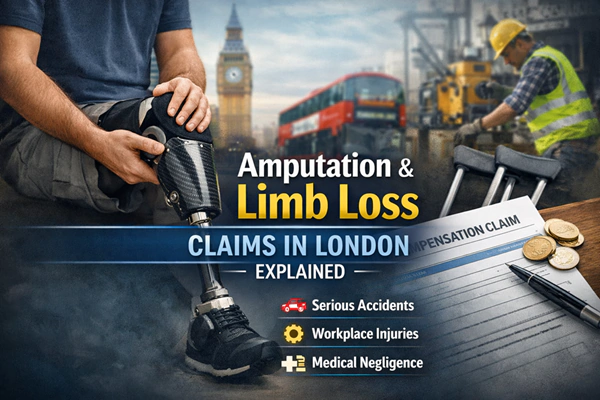
An amputation or limb loss is a sudden, life-altering event. In London, these injuries most often arise from serious road traffic collisions, workplace accidents involving heavy machinery, or medical negligence where timely treatment fails to happen. What makes limb loss particularly devastating is not just the initial injury but the permanent changes it brings to a person’s independence, mobility, employment, and sense of self.
For many people, the shock is immediate. One moment life is normal. The next, everything changes. Understanding how these injuries occur, the impact they have, and what legal support is available can help injured people and their families make sense of what comes next.
How amputations and limb loss occur in London
London’s size, density, and infrastructure contribute to specific risks that can lead to catastrophic injuries.
Serious road traffic accidents are a leading cause. High-speed collisions, crushing injuries involving lorries or buses, and impacts at busy junctions can cause such severe damage that a limb cannot be saved. Motorcyclists, cyclists, pedestrians, and drivers are all at risk in different ways.
Workplace accidents are another common cause. Construction sites, warehouses, factories, and transport hubs across London involve heavy equipment, moving vehicles, and complex machinery. Where safety systems fail, or proper training and supervision are lacking, the consequences can be severe.
Medical negligence can also result in avoidable amputations. Delayed diagnosis of infections, vascular problems, or compartment syndrome can allow conditions to worsen beyond repair. Surgical errors or inadequate monitoring of post-operative complications can also result in preventable limb loss.
Amputations sometimes occur as a result of untreated injuries that worsen over time. Delays or inadequate care can escalate what starts as a fracture, wound, or circulation problem.
The medical and functional consequences of limb loss
The physical effects of amputation extend far beyond the loss of a limb itself. Many people experience chronic pain, including phantom limb sensations that can be difficult to manage. Balance, strength, and coordination are often affected, particularly where a lower limb is involved.
Prosthetics play a vital role for many amputees, but they are not a simple fix. Learning to use a prosthetic limb takes time, training, and ongoing adjustment. Not every amputee is able to use a prosthetic comfortably or consistently, and some require multiple devices for different activities.
Rehabilitation is usually long-term. Physiotherapy, occupational therapy, and specialist medical input are often needed for months or years. The goal is not just mobility but helping the individual adapt safely to daily life, work, and social activities.
Psychological and lifestyle impact
Limb loss can have a profound emotional impact. Many people experience grief, anxiety, or depression as they adjust to changes in their body and capabilities. Particularly where the injury is visible or limits independence, it can affect confidence.
Everyday tasks that were once automatic can become challenging. Driving, working, cooking, or caring for others may require new approaches or assistance. Relationships can also change as partners or family members take on caring roles.
Employment frequently experiences disruptions. Some people are unable to return to their previous job, while others need retraining or workplace adaptations. These changes can create financial pressure alongside the emotional and physical strain of recovery.
What compensation may cover in amputation and limb loss claims?
Compensation in amputation and limb loss claims is intended to reflect both the immediate injury and the long-term impact on a person’s life. Depending on the circumstances, compensation may cover prosthetic limbs and future replacements, rehabilitation and therapy costs, and specialist medical treatment.
Many claims also include the cost of home adaptations, such as ramps, widened doorways, or accessible bathrooms. Vehicle adaptations may be required to allow continued independence and mobility.
Loss of earnings is a significant factor, particularly where an individual cannot return to their previous role or faces reduced earning capacity in the future. Compensation can also account for care and support needs, whether provided professionally or by family members.
Every case is assessed individually, taking into account the severity of the injury, the person’s age, occupation, and long-term prognosis.
Why specialist evidence matters in limb loss claims
Amputation claims are complex and rely heavily on expert evidence. Medical specialists are often needed to explain how the injury occurred, whether it was avoidable, and what future treatment will be required.
Prosthetics experts can assess the type of devices needed over a lifetime, including replacements as technology changes. Occupational therapists may evaluate how the injury affects daily living and what adaptations or support are necessary.
Care experts and financial specialists may also be involved to calculate long-term needs accurately. This evidence ensures that any claim reflects the true, ongoing impact of limb loss rather than just the immediate injury.
Time limits and early action considerations
There are strict time limits for bringing personal injury claims. While these vary depending on the circumstances, delays can make it harder to gather evidence and assess long-term needs accurately.
Early legal advice can help preserve medical records, accident reports, and witness evidence. It also allows time for appropriate expert assessments to take place once the individual’s condition has stabilised.
How Marley Solicitors support amputation and limb loss claims
Marley Solicitors represent clients who have suffered serious, life-changing injuries. In amputation and limb loss cases, the focus is on understanding the full impact of the injury, both now and in the future.
By working with experienced medical and rehabilitation experts, Marley Solicitors aim to build claims that reflect long-term needs rather than short-term costs. The approach is careful, thorough, and it is centred on the individual’s recovery and quality of life.
Moving forward after limb loss
An amputation or limb loss can feel overwhelming, particularly in the early stages. With the right medical care, rehabilitation, and legal support, many people are able to rebuild independence and stability over time.
Seeking advice does not mean rushing into decisions. Understanding your options and properly considering the support you need, both now and in the future, can be a simple approach.