

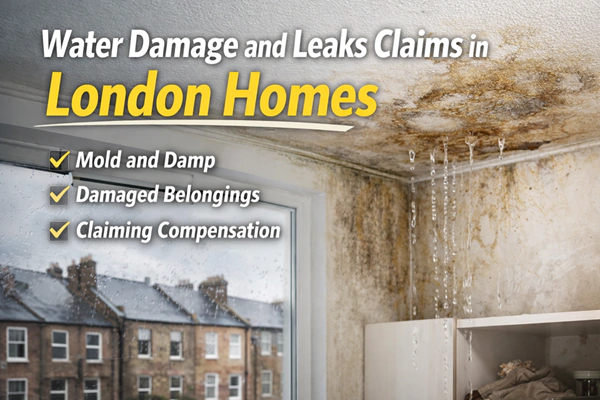
It often starts small; the damage often begins with a stain appearing on the ceiling. A damp odour emanates from a cupboard. A drip under the sink that seems easy to ignore. In London homes, water damage rarely arrives as a single dramatic event. More often, it builds quietly while repairs are delayed or avoided.
For tenants, the damage is not just to the property. Over time, leaks can affect health, destroy belongings, and make parts of a home unusable. Unresolved problems raise questions about responsibility and potential compensation.
What actually counts as water damage or a leak?
Water damage is not limited to flooding or burst pipes. Many claims involve persistent issues that worsen over time rather than sudden failures.
This can include leaking roofs, damaged gutters, faulty plumbing, overflowing drains, or water ingress from neighbouring properties. In converted flats and older London buildings, leaks between floors are particularly common.
Even where water is not visibly pooling, on-going moisture can still cause damage. Untreated leaks can manifest as saturated walls, warped flooring, and weakened structures.
Why water damage is such a common issue in London
London’s housing stock plays a significant role. Many properties are old, subdivided, or poorly maintained. Repairs are sometimes delayed because responsibility is unclear, particularly in buildings with managing agents, freeholders, and multiple landlords involved.
Access issues can also cause problems. Leaks that originate in another apartment may go unresolved if neighbours are uncooperative or absent. In some cases, temporary fixes are applied without addressing the underlying cause.
Cost is another factor. Repairs to roofs, pipes, or shared drainage systems can be expensive. When landlords delay action, the damage often spreads and becomes harder to fix.
How water damage affects health and daily living
Living with water damage is more than an inconvenience. Persistent damp conditions can contribute to respiratory issues, worsen existing health conditions, and create an unpleasant living environment.
Water damage often disrupts daily life; rooms may become unusable due to damp, mould, or electrical safety concerns. Furniture, clothing, and personal items can be damaged beyond repair.
There is also a mental toll. Repeatedly reporting the same issue, waiting for repairs, and watching conditions deteriorate can be exhausting. Many tenants describe feeling ignored or stuck in a situation they cannot control.
When does water damage become a legal issue?
Not every leak automatically leads to a claim. The key questions are responsibility and response.
Landlords are generally responsible for maintaining the structure of the property and installations for water, drainage, and sanitation. Upon discovering a leak, it is incumbent upon them to promptly investigate and execute repairs.
Ignoring reports, delaying repairs without a valid reason, or resorting to temporary measures instead of proper fixes can lead to problems. Where water damage persists and affects the tenant’s use of the property, legal action may be possible.
What tenants should do when a leak is discovered
Early action can make a significant difference. Tenants are usually expected to report leaks as soon as they become aware of them.
Keeping clear records is important. This includes noting when the issue started, how it has progressed, and how the landlord or managing agent responded. Photographs taken over time can be particularly helpful in showing deterioration.
Where health issues arise, medical records may also support a claim by showing the wider impact of the water damage.
Compensation considerations in water damage and leak claims
Compensation in water damage claims reflects how the leak affected the tenant’s ability to live in the property. This may include a reduction in rent for periods where rooms were unusable or conditions were unsafe.
Claims may also consider distress and inconvenience, particularly where the problem persisted for a long time. In some cases, compensation can cover damage to personal belongings caused by the leak.
Each case depends on its specific circumstances. The length of time the leak continued, the seriousness of the damage, and how the landlord responded are all relevant factors.
Why delays often make claims stronger
Water damage rarely improves on its own. Small leaks tend to spread, causing greater damage over time. From a legal perspective, this progression can be important.
Where a landlord was aware of a problem but failed to act, the worsening condition of the property may demonstrate neglect. Repeated reports followed by inaction can strengthen a tenant’s position.
This is why documenting the issue from the start is so valuable. It helps show not just that a leak existed, but how it was handled.
How Marley Solicitors help with water damage and leak claims
Marley Solicitors support tenants in London who are dealing with unresolved water damage and leaks. Their approach focuses on identifying whether a landlord has failed to meet their obligations and what impact that failure has had on the tenant.
By reviewing evidence, repair histories, and the condition of the property, they can advise whether a claim may be appropriate. The aim is to achieve practical outcomes, whether that involves securing proper repairs, compensation, or both.
Deciding what to do next
Many tenants live with water damage for far longer than they should, often because they are unsure of their rights or worry about causing conflict. Understanding where responsibility lies can help clarify the situation.
Seeking advice does not mean escalating matters unnecessarily. It can simply provide clarity on options and help tenants decide the best way to restore safe and liveable conditions in their home.